Last Updated on November 10, 2025 by Karen
Perfectly roasted boneless (or bone-in) fresh ham with garlic rub, brown sugar glaze, and Dijon mustard. Tips for juicy ham, golden perfection, and easy leftovers.
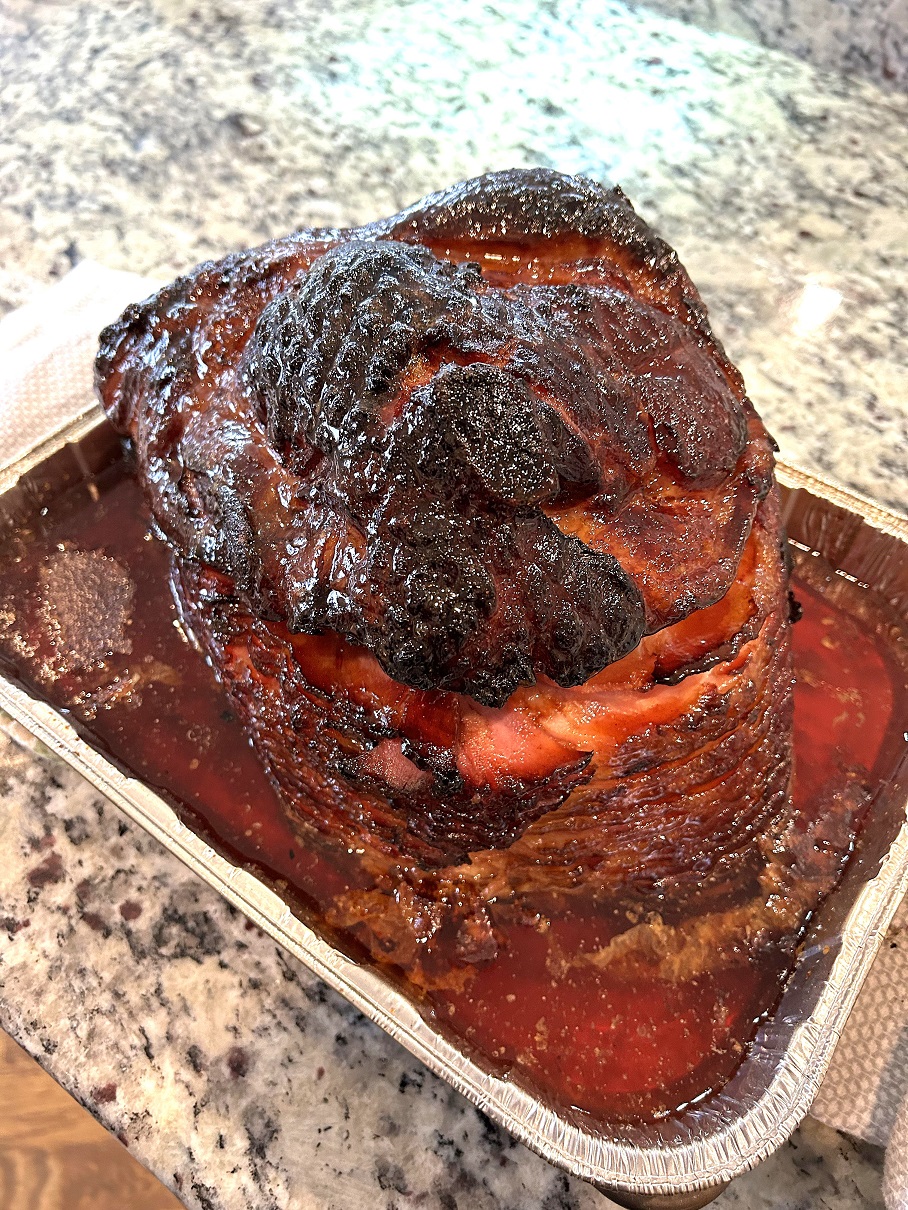
Looking for the ultimate fresh ham roast that’s juicy, flavorful, and guaranteed to impress your family or guests? This Fresh Ham Roast Recipe with Garlic Herb Rub combines the best techniques from multiple classic fresh ham recipes to create a perfectly roasted, golden-brown masterpiece. Whether it’s for Easter, Thanksgiving, or a special family dinner, this recipe is designed to give you a well-seasoned meat with a moist cooking environment and a beautiful presentation.
Why Use Fresh Ham?
A fresh ham is unlike your typical pre-cooked, spiral-cut, or cured hams. Fresh ham is raw, uncured, unsmoked, and unprocessed, making it a versatile canvas for flavor. This recipe works for:
Boneless ham – easier to slice, ideal for sandwiches, and faster to cook.
Bone-in ham – adds extra flavor and is perfect if you want traditional presentation or make pan drippings for gravy.
Shank-end ham or sirloin-end ham – both work beautifully with this cooking method, though the shank-end may require slightly longer cooking time.
Fresh ham is leaner than other cuts like pork loin or picnic roasts, and when cooked low and slow, it yields tender, juicy meat that slices perfectly with a sharp knife.

Ingredients and Seasonings for Making Fresh Ham Roast
The flavor in this fresh ham recipe comes from a blend of seasonings, including a garlic rub, herbs, and a hint of sweetness. Here’s what you’ll need for a 10 lb boneless ham:
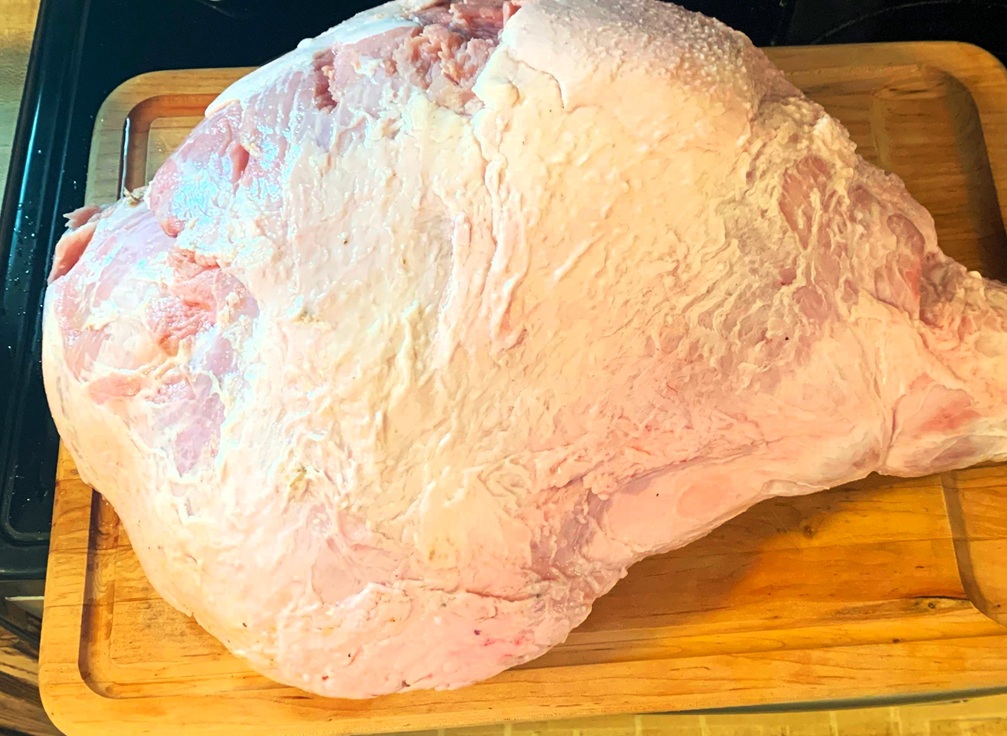
Boneless ham (fresh, not precooked): The star of your roast, a fresh ham is uncured and raw, giving you full control over flavor and seasoning. You can use bone-in ham for more depth of flavor, but cooking times will be slightly longer. If using a store-bought ham, make sure it’s labeled “fresh” and not “pre-cooked” or “spiral ham.”
Kosher salt: Essential for drawing out moisture and forming a flavorful crust. Coarse kosher salt is ideal for creating that golden, crispy exterior. If you don’t have kosher salt, sea salt works, but use slightly less.
Brown sugar: Adds sweetness and caramelization to the glaze or rub. Light or dark brown sugar can be used; dark will give a deeper molasses flavor. For a sugar-free alternative, try coconut sugar or maple syrup.
Freshly ground black pepper: Adds subtle heat and depth. Freshly ground pepper is key—pre-ground tends to lose its aromatic oils. You can experiment with white pepper for a milder flavor.
Fresh thyme: Thyme provides an earthy, aromatic note that pairs beautifully with pork. If fresh isn’t available, dried thyme works—use about a third of the amount, as dried is more concentrated.
Fresh rosemary: Rosemary adds piney, woodsy flavor that complements the rich meat. If using dried rosemary, crush it to release oils and use about a third of the fresh quantity.
Garlic: Garlic infuses the ham with savory aroma. For subtle flavor, mince the garlic into a rub; for a more intense flavor, make small slits in the ham and insert whole garlic cloves. Roasting garlic will mellow and sweeten it. I prefer fresh garlic over garlic powder.
Oranges: Citrus adds brightness and helps tenderize the ham. Use fresh oranges, and zest half of one for extra aromatic punch. Lemons or limes can be substituted, though oranges provide a classic balance of sweetness.
Water (or pineapple juice/apple cider vinegar): Creates a moist cooking environment, keeping the ham juicy during roasting. Pineapple juice adds sweetness and natural tenderizing enzymes; apple cider vinegar adds a subtle tang.
Olive oil: Helps herbs and spices adhere to the ham and promotes browning. You can also use vegetable or avocado oil. Lightly coat the ham for even seasoning.
White wine (optional): Adds acidity and depth to pan juices and glazes. Dry white wines work best. If you prefer non-alcoholic options, substitute with more water or apple cider.
Ground cloves, dry mustard, maple syrup, or honey for glaze (optional): These ingredients add layers of flavor to your glaze. Cloves bring warm spice, dry mustard adds tangy sharpness, and maple syrup or honey gives caramelized sweetness. Adjust quantities based on your taste preference.
Preparing the Ham
Step 1: Bring to Room Temperature
Before roasting, allow your boneless ham to sit at room temperature for about 1–2 hours. This ensures the meat cooks evenly, preventing the outside from overcooking while the center of the ham reaches the proper internal temperature.
Step 2: Prep the Roast
Preheat the oven to 425 degrees F, placing your bottom oven rack in the lowest position to accommodate a large roasting pan with an elevated rack.
Score the fat layer in a diamond pattern with a 2-inch slit (or small slit) spacing. This allows the garlic rub and seasonings to penetrate the meat.
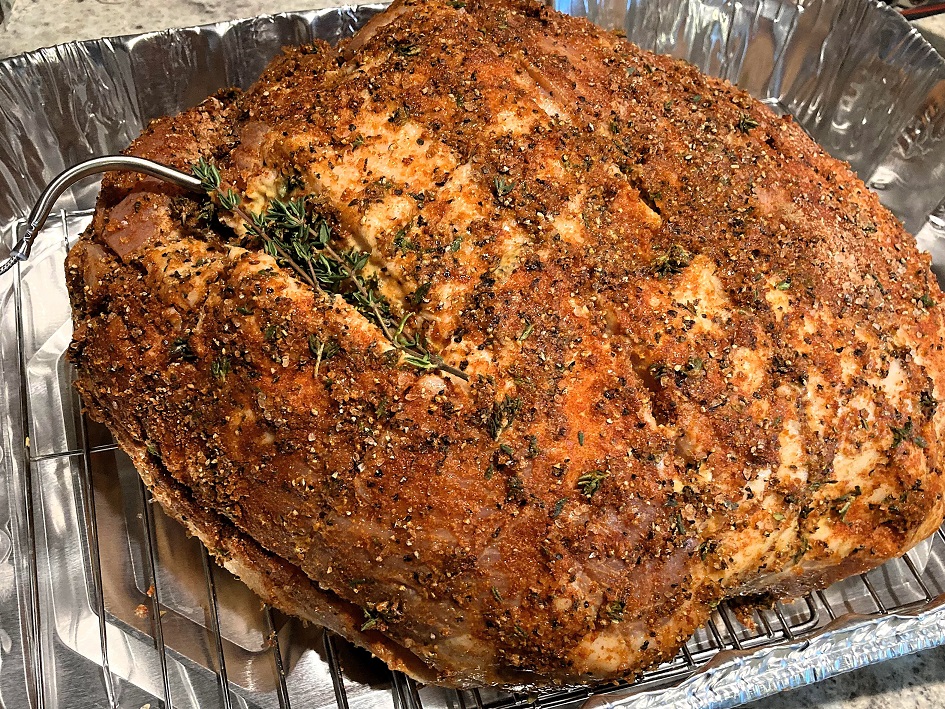
In a small bowl, combine salt, brown sugar, black pepper, minced garlic, thyme, and rosemary. Optional: add a pinch of ground cloves or dry mustard for depth.
Coat ham generously with the rub, making sure it gets into all cuts and scores.
Step 3: Set Up Roasting Pan
Place orange slices on the bottom of the pan.
Place ham on a wire rack or v-rack, fat side up.
Add 3 cups of water and white wine for a moist cooking environment. You may need to add a little water during the roasting process to prevent pan juices from burning.
Step 4: Roast the Ham
High heat start: Roast at 425 degrees F for 30 minutes to create golden perfection on the outside.
Low heat finish: Reduce oven temperature to 300 degrees F and continue roasting until the internal temperature reaches 140–150 degrees F (for medium doneness). Use a meat thermometer or instant-read thermometer to check the center of ham.
Tent the ham with aluminum foil if the skin-on pork roast starts browning too quickly.
Rest the ham for 30–45 minutes before slicing. This allows the pan drippings to redistribute, keeping the meat juicy.
Step 5: Optional Glazes
At around 130 degrees F, you can brush on:
- Maple syrup or honey for a sweet glaze
- Dijon mustard and apple cider vinegar for a tangy finish
- A simple olive oil and herb mixture for savory notes
Return the ham to the oven briefly to finish golden perfection.
Serving Suggestions with Roasted Fresh Ham
A roasted fresh ham is a versatile centerpiece that pairs beautifully with a wide range of sides, sauces, and meal ideas. For a traditional holiday or family dinner, slice your ham across the grain to ensure each piece is tender and easy to chew. Serve it alongside your favorite Easter or holiday sides for a classic and crowd-pleasing spread. Some standout options include:
Roasted potatoes – crispy on the outside and fluffy on the inside, they absorb the rich pan drippings perfectly.
Creamy cauliflower bake – a smooth, cheesy vegetable side that complements the savory sweetness of the ham.
Brussels sprouts – roasted or sautéed with a touch of olive oil, garlic, or balsamic vinegar for a flavorful green option.
Italian-style mashed potatoes – whipped with olive oil, garlic, or Parmesan cheese for a rich, comforting side.
Don’t forget the sauces! Elevate your boneless ham with a drizzle of mustard sauce, Dijon mustard, or pan gravy made from the pan drippings. For a subtle twist, add a splash of apple cider vinegar, maple syrup, or a zest of orange to your sauce for bright, complex flavors.

What to do with Leftover Roasted Fresh Ham?
Leftovers are a gift in themselves. A well-seasoned ham can be repurposed in countless ways, ensuring nothing goes to waste:
Baked Ham and Cheese Pasta – cube the ham and stir it into a cheesy pasta bake for a quick weeknight dinner.
Ham sandwiches – layer slices with your favorite mustard, cheese, and fresh bread for a satisfying lunch.
Breakfast additions – diced ham works beautifully in scrambled eggs, omelets, or breakfast burritos.
Pulled pork-style shredded ham – shred the ham for sliders, tacos, or stir-fries, pairing with Cajun spices, pineapple juice, or Korean red pepper flakes for a flavorful twist.
By planning ahead, you can make your roasted fresh ham the centerpiece of multiple meals, ensuring every ounce is enjoyed to the fullest.
Storage for Leftover Roasted Ham
Proper storage is key to maintaining the moisture, flavor, and safety of your roasted fresh ham. Because fresh ham is lean and naturally tender, following the right storage methods ensures that it stays just as delicious when reheated or repurposed.
Refrigerator Storage
Place leftover ham in an airtight container or wrap it tightly with aluminum foil to prevent exposure to air, which can dry out the meat.
Stored properly, sliced or diced ham will last 3–5 days in the fridge.
Always store ham on the middle or top shelves of your refrigerator, away from raw foods, to prevent cross-contamination.
Freezer Storage
For longer-term storage, wrap the ham in plastic wrap first, then aluminum foil, and place it in a freezer-safe bag or container.
Frozen ham can maintain quality for up to 2 months, making it perfect for preparing meals ahead of time or saving holiday leftovers.
Label the package with the date so you can track freshness.
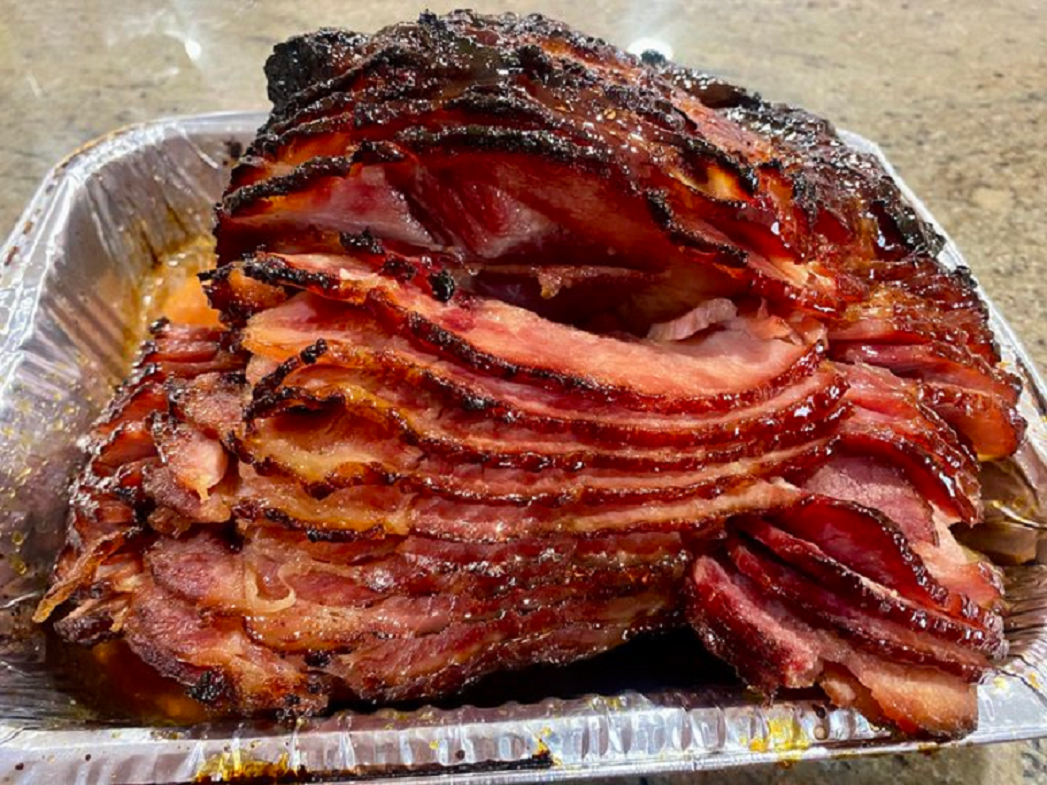
Leftover Ideas and Reheating Tips
When it comes to using leftover ham, the possibilities are endless:
Breakfast scrambles and omelets – dice the ham into small pieces for quick, protein-packed morning meals.
Soups, stews, or pasta dishes – stir in cubes of ham to enhance flavor and add richness.
Sandwiches and sliders – layer ham with cheese, Dijon mustard, or mustard sauce for a hearty lunch.
Pulled ham-style dishes – shred the leftover ham to mimic pulled pork, perfect for tacos, burritos, or Traeger grill recipes.
Pro tip: Always reheat ham gently, ideally in a moist cooking environment. Use pan juices, a little water, or a low oven temperature to prevent the meat from drying out. For smaller slices, reheating in the microwave with a covering of foil or a damp paper towel works well for touch device users preparing quick meals.
By following these storage and serving tips, your fresh ham recipe can provide delicious meals for days, even weeks, turning every leftover into a culinary opportunity.
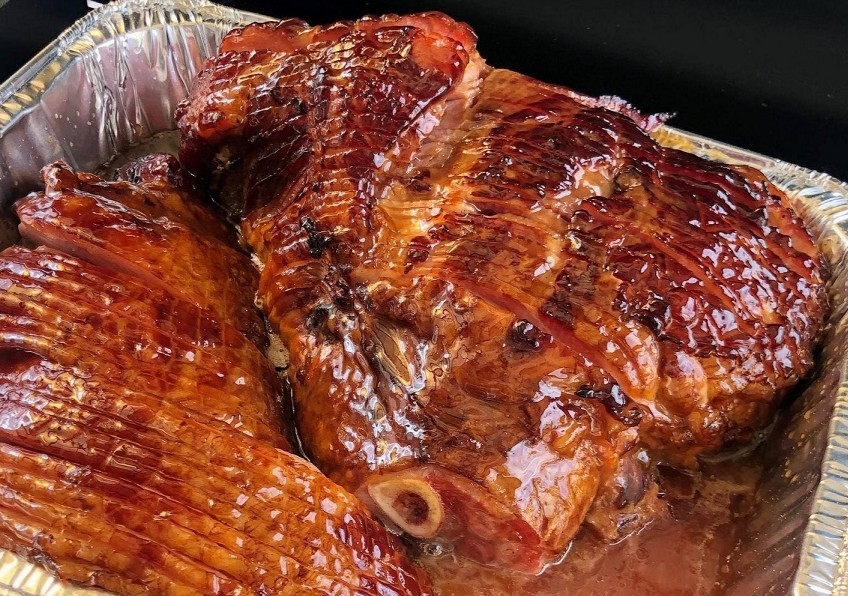
Boneless Fresh Ham Roast with Garlic Herb Rub
Ingredients
- 10 lb fresh boneless ham
- 1 ½ tbsp kosher salt
- ½ cup brown sugar
- 1 tbsp freshly ground black pepper
- 2 tbsp fresh thyme minced
- 2 tbsp fresh rosemary minced
- 4 cloves garlic minced
- 3-4 oranges halved or sliced
- 3 cups water or pineapple juice/apple cider vinegar
- 1 cup white wine optional
- Olive oil for rubbing
- Optional: pinch of ground cloves dry mustard, maple syrup or honey for glaze
Instructions
- Remove ham from fridge; let come to room temperature (1–2 hours). Score ham in diamond pattern, 2-inch cuts, insert garlic if desired.
- Preheat oven to 425 degrees F, bottom oven rack, and prepare large roasting pan with elevated rack.
- In small bowl, mix salt, brown sugar, black pepper, garlic, thyme, rosemary. Rub over ham and into scores.
- Place ham on rack over orange slices, pour cups of water and wine in bottom of pan.
- Roast at high heat 425°F for 30 minutes. Reduce oven to 300°F; cook until internal temperature 140–150°F. Tent with aluminum foil if browning too fast.
- Optional: Brush glaze at 130°F, return to oven until final golden perfection.
- Let ham rest 30–45 minutes. Slice with sharp knife, serve with pan drippings, mustard sauce, or side dishes
This recipe will give you moist, flavorful, and visually stunning roasted fresh ham, perfect for holidays, special dinners, or any first-time attempt at a fresh ham roast.